


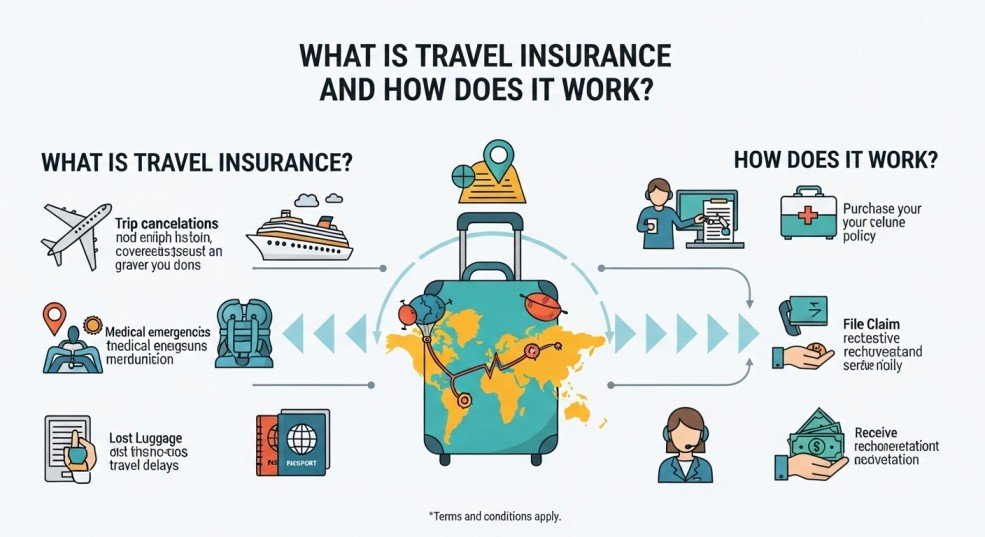
What Is Travel Insurance and How Does It Work?
Imagine you’re counting down the days until a long-awaited trip abroad — the sun-soaked beaches, cozy cafes, and unplanned detours that make travel unforgettable. Now imagine something goes wrong: your flight gets canceled due to a storm, your luggage never arrives, or you fall ill in a foreign country. Without travel insurance, those mishaps could cost you hundreds or even thousands of dollars out of pocket. That’s exactly what this article is here to demystify — the ins and outs of travel insurance, how it functions, and why it’s something every traveler should understand before hitting the road.
Understanding Travel Insurance Basics
Definition of Travel Insurance
At its heart, travel insurance is a type of short-term insurance policy designed to protect you financially from unexpected events that can occur before or during a trip. Whether traveling domestically or abroad, this coverage shields you from a range of unforeseen issues — from canceled flights and lost luggage to emergency medical expenses.
This contrasts with typical health or auto insurance because it focuses specifically on risks associated with travel — things that might derail your plans or leave you with costs you didn’t budget for.
Why Travel Insurance Exists
You might be wondering: “Why should I pay extra for insurance when all I want to do is have fun?” The simple truth is that travel carries inherent risks — some predictable, others not so much. Flights get delayed, weather systems change at the last minute, and medical emergencies don’t wait for the perfect vacation schedule. Travel insurance exists to turn these “what-ifs” into manageable situations without wrecking your travel budget.
In many countries, travel insurance isn’t just a smart idea — it’s mandatory for entry, especially for visas like the Schengen visa, which requires proof of coverage under specific criteria.
The Purpose of Travel Insurance
Financial Protection for Travelers
The primary role of travel insurance is to provide financial protection. Think of it as a financial safety net: If something goes wrong, your insurance absorbs or reimburses eligible costs so you don’t have to pay full price yourself.
Let’s say your flight home gets canceled due to a hurricane and you’re stuck an extra night in a hotel. Without insurance, those hotel, meal, and transport costs come straight from your pocket. With coverage, you may be reimbursed for those qualifying expenses — depending on your policy’s terms.
Peace of Mind on the Road
Perhaps just as important as financial reimbursement is the peace of mind that travel insurance provides. Knowing you’re covered for emergencies — whether medical, logistical, or travel-related — allows you to relax and enjoy your journey rather than worry about what might go wrong. This is especially true for travelers heading overseas, where healthcare costs can be prohibitively expensive without coverage.
Core Components of Travel Insurance
Travel insurance isn’t just one monolithic product — it’s a collection of coverages, each designed to protect against specific scenarios.
Trip Cancellation & Interruption Coverage
Perhaps the most common reason travelers buy insurance is to protect their non-refundable trip costs. If you need to cancel or interrupt your trip due to illness, injury, natural disasters, or other covered reasons, travel insurance can reimburse the money you’ve already paid for flights, accommodations, tours, and more.
This coverage can be a lifesaver, especially with international travel where non-refundable expenses can add up quickly.
Medical and Emergency Health Coverage
Medical coverage often serves as the backbone of a travel insurance policy. If you get sick or injured away from home and require treatment — including hospital stays or ambulance services — travel insurance can cover these costs. It also frequently includes emergency evacuation or repatriation, meaning if you need to be transferred to another facility or even brought home, these expenses can be covered.
This is crucial because many regular health insurance plans do NOT cover you abroad.
Baggage and Personal Belongings Coverage
Losing a suitcase or having your belongings stolen can sour even the best trip. Most travel insurance policies include coverage for lost, stolen, or damaged luggage and personal items — providing reimbursement to replace what was lost up to specified limits.
Travel Delay and Additional Expenses
Think delayed flights, sudden rescheduling, or extended layovers: these inconveniences can rack up unexpected costs. Travel insurance can cover expenses like meals, accommodations, and essentials while you wait — as long as the delay meets the criteria laid out in the policy.
How Travel Insurance Works in Practice
Premiums and Policy Purchase
To get travel insurance, you purchase a policy before your trip — typically at the time you book your travel. The cost, known as the premium, depends on factors like your destination, trip length, age, and the type of coverage you choose.
Premiums vary widely based on risk factors and the breadth of coverage.
Filing a Travel Insurance Claim
When a covered incident occurs — like a medical emergency or cancelled trip — you file a claim with your insurer. This usually involves submitting documentation (receipts, medical reports, airline confirmations) to prove both that the event happened and that it’s covered under your policy. If approved, the insurer reimburses your eligible expenses up to the policy limits.
When Travel Insurance “Kicks In”
Travel insurance only covers unforeseen and covered events — not things you could reasonably expect beforehand. For example, buying insurance after a hurricane is already forecasted doesn’t mean damage related to that storm will be covered.
Types of Travel Insurance
Single Trip vs. Annual Multi-Trip Plans
A single-trip policy covers one specific journey from start to finish. In contrast, an annual multi-trip policy covers all trips you make within a year — ideal for frequent travelers.
Comprehensive vs. Basic Policies
Basic policies may only cover limited risks like trip cancellation or lost luggage. Comprehensive policies bundle broader protections, including medical emergencies, travel delays, baggage coverage, and emergency assistance services.
Specialized Coverage and Add-Ons
Some travelers need more than standard protection. Add-ons like coverage for high-risk sports, “Cancel For Any Reason,” or rental car excess can fill gaps in basic policies — though these options typically increase the premium.
Common Exclusions and Limitations
While travel insurance can cover many risks, it’s important to know what it typically does NOT cover.
Pre-Existing Conditions
Unless you purchase a waiver or specific coverage clause, most insurers exclude treatment related to pre-existing medical conditions.
High-Risk Activities
Adventure travel featuring activities like skydiving or mountaineering may not be covered without specialist add-ons.
Known Events & Exclusions
Losses arising from known events — such as a storm already forecasted before you buy insurance — are generally excluded.
Do You Need Travel Insurance?
Factors to Consider
Whether you need travel insurance depends on your destination, health, trip cost, and existing coverage.
International travel, non-refundable bookings, and destinations with high medical costs make insurance much more valuable.
When It’s Essential
Insurance becomes particularly crucial when traveling abroad, engaging in expensive activities, or purchasing non-refundable travel services.
Practical Tips for Travelers
Comparing Policies and Costs
Don’t just pick the first policy you see. Compare coverages, limits, and exclusions across providers to find the right fit for your needs.
Reading the Fine Print
Always read your policy’s terms carefully — especially the exclusions and requirements for documentation when filing claims.
Knowing What Your Credit Cards Cover
Some premium credit cards include travel protection benefits — but these may not cover every situation. Check what’s already included before buying separate travel insurance.
Conclusion
Travel insurance might sometimes seem like just another expense, but in reality, it’s a safety net that can protect your finances and peace of mind when travel plans go awry. Whether it’s reimbursing you for non-refundable trip costs, covering medical emergencies abroad, or helping replace lost luggage, a well-chosen travel insurance policy can make all the difference between a stressful situation and a manageable inconvenience. Being informed, comparing options, and understanding what your coverage includes ensures you’re ready for life’s unexpected twists — even thousands of miles from home.
FAQs
- Is travel insurance mandatory for all trips?
Not for every trip, but some countries require it for visa approval or entry. - Does travel insurance cover pre-existing medical conditions?
Usually not — unless you purchase a specific waiver or add-on. - Will travel insurance refund my vacation completely?
Only for covered events and up to your policy limits; not all situations are covered. - Can I buy travel insurance after I’ve left home?
Some insurers allow coverage after departure, but policies usually work best when bought before the trip starts. - Does travel insurance cover adventure sports?
Only if you have specific coverage for high-risk activities included in your policy.
