


What is FWD Travel Insurance Policy Wording?
Understanding Policy Wording in Simple Terms
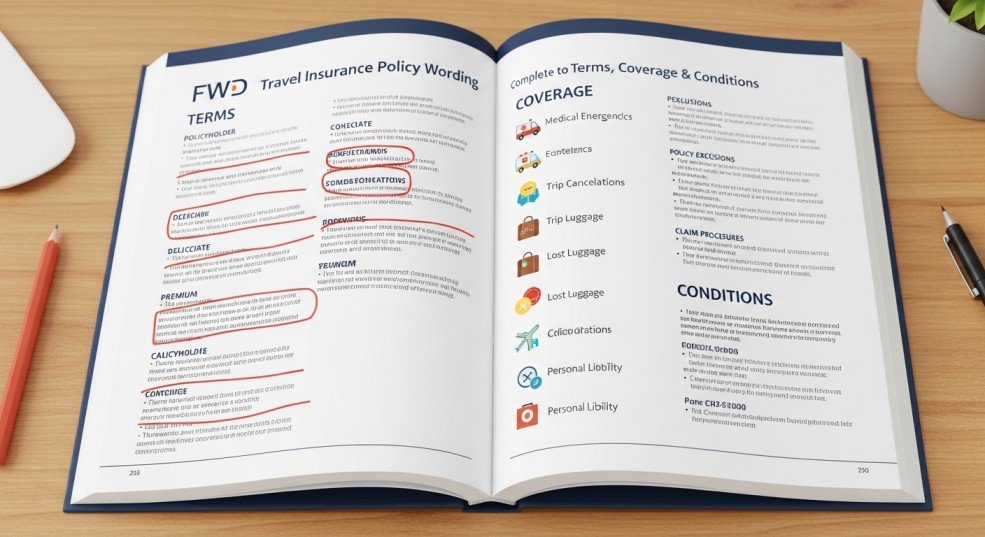
If you’ve ever opened an insurance document and felt like you were reading a completely different language—you’re not alone. FWD travel insurance policy wording refers to the official document that outlines exactly what your insurance covers, what it doesn’t, and under what conditions you can make a claim. It’s essentially the rulebook of your policy.
This document is not just legal jargon—it’s your safety net explained in detail. It defines everything from medical coverage limits to baggage protection, claim procedures, and exclusions. Think of it like the terms and conditions you usually skip, except here, skipping could cost you money or leave you unprotected during a trip.
Understanding policy wording helps you avoid unpleasant surprises. For example, many travelers assume all medical expenses are covered, but the wording may specify limits, conditions, or exclusions. Knowing these details in advance gives you clarity and confidence when traveling.
Key Components of FWD Travel Insurance Policy Wording
Coverage Section Explained
The coverage section is the heart of your policy. It explains what risks are protected and how much compensation you can receive. Typically, FWD travel insurance includes:
- Medical expenses and hospitalization
- Emergency evacuation and repatriation
- Trip cancellation and interruption
- Baggage loss or delay
- Personal accident coverage
Each benefit comes with specific limits and conditions. For instance, medical coverage may include hospital stays but exclude elective treatments. This is why reading the details carefully is so important—it tells you exactly where your protection starts and ends.
Benefits Schedule and Limits
Within the policy wording, you’ll find a benefits schedule, which lists the maximum payout for each type of claim. This section acts like a financial map of your coverage.
For example, it may specify:
- Maximum medical expenses coverage
- Daily allowance for hospital stays
- Limits for lost baggage or valuables
These limits vary depending on the plan you choose—basic, premium, or business. The higher the plan, the higher the limits.
Exclusions in FWD Travel Insurance Policy Wording
Common General Exclusions
Exclusions are just as important as coverage. They tell you what is not covered, and ignoring them can lead to claim rejections. Common exclusions in FWD policies include:
- Pre-existing medical conditions (unless added)
- High-risk activities without additional coverage
- Travel against government advisories
- Alcohol or drug-related incidents
These exclusions are standard across most insurance providers, but the exact wording matters. Even small details can affect whether your claim is approved.
Specific Activity Exclusions
If you’re planning adventurous activities like scuba diving, skiing, or trekking, you need to pay close attention here. Many policies exclude injuries from high-risk sports unless you purchase additional coverage.
It’s like driving a car without insurance for certain roads—you might be covered in general, but not in specific risky situations.
Conditions and Eligibility Requirements
Who Can Be Covered
FWD travel insurance policies clearly define who is eligible. This usually includes:
- Individuals within a certain age range
- Residents of specific countries
- Travelers starting their journey from an approved location
Some plans also offer family coverage, allowing multiple members to be insured under one policy.
Policy Activation and Validity
The policy wording explains when your coverage starts and ends. Typically:
- Coverage begins when your trip starts
- Ends when you return home
- Must be purchased before departure
Missing this timing can invalidate your policy, which is why it’s crucial to understand these conditions.
Claims Process in FWD Travel Insurance Policy Wording
Step-by-Step Claims Procedure
FWD Travel Insurance Policy Wording provides a structured claims process detailed in the policy wording. Generally, it involves:
- Reporting the incident as soon as possible
- Collecting supporting documents (receipts, reports)
- Submitting the claim online or via app
- Waiting for assessment and approval
The wording specifies timelines, required documents, and procedures. Missing any step can delay or reject your claim.
Required Documentation
The policy clearly lists what documents you need, such as:
- Medical reports
- Police reports (for theft)
- Flight delay confirmations
- Receipts and invoices
Keeping these documents safe is essential. Without proof, even valid claims can be denied.
Important Clauses to Watch Out For FWD Travel Insurance Policy Wording
Pre-existing Conditions Clause
This clause defines whether existing health conditions are covered. Most basic plans exclude them unless you add special coverage.
Ignoring this clause is one of the most common mistakes travelers make. If you have a medical history, always check this section carefully.
Travel Delay and Cancellation Clause
This part explains under what circumstances you can claim compensation for delays or cancellations. Not all reasons are covered—only specific events like weather disruptions, airline issues, or emergencies.
Understanding this clause helps you know when you’re eligible for reimbursement.
Comparison of Policy Wording Elements
| Feature | FWD Policy | Typical Insurance Policies |
|---|---|---|
| Clarity | User-friendly | Often complex |
| Customization | High | Limited |
| Digital Claims | Yes | Sometimes |
| Add-ons | Flexible | Restricted |
Why Reading Policy Wording is Essential
Avoiding Claim Rejections
Many claim rejections happen because travelers don’t read the FWD Travel Insurance Policy Wording. They assume coverage that doesn’t actually exist. Reading the document helps you understand exactly what you’re entitled to.
Maximizing Your Coverage
When you understand your policy, you can use it more effectively. You’ll know what situations are covered and how to act in emergencies.
It’s like having a map—you won’t get lost if you know where you’re going.
Tips to Understand FWD Travel Insurance Policy Wording Easily
Focus on Key Sections First
Start with:
- Coverage details
- Exclusions
- Claims process
These sections give you the most important information quickly.
Use Real-Life Scenarios
Try imagining situations:
- What if your flight is delayed?
- What if you lose your luggage?
- What if you get sick abroad?
Then check how the policy handles each case. This makes understanding much easier.
Conclusion
FWD travel insurance policy wording might seem complex at first glance, but it’s one of the most important documents you’ll ever read before traveling. It clearly defines your coverage, limits, exclusions, and responsibilities. Taking the time to understand it can save you from unexpected costs and stressful situations.
Instead of treating it like fine print, think of it as your travel safety manual. The more familiar you are with it, the better prepared you’ll be for anything your journey throws your way.
FAQs (FWD Travel Insurance Policy Wording)
1. What is included in FWD travel insurance policy wording?
It includes coverage details, exclusions, benefits, claim procedures, and conditions.
2. Why is policy wording important?
It helps you understand what is covered and prevents claim rejections.
3. Does FWD cover pre-existing conditions?
Usually not, unless you purchase additional coverage.
4. How can I file a claim with FWD?
You can submit claims online or through their app with required documents.
5. Where can I get the policy wording document?
You can download it from the official FWD website after purchasing a policy.
